In the spring of 2026, a team based on a NOAA research vessel located in the Gulf of Mexico did something never attempted before.
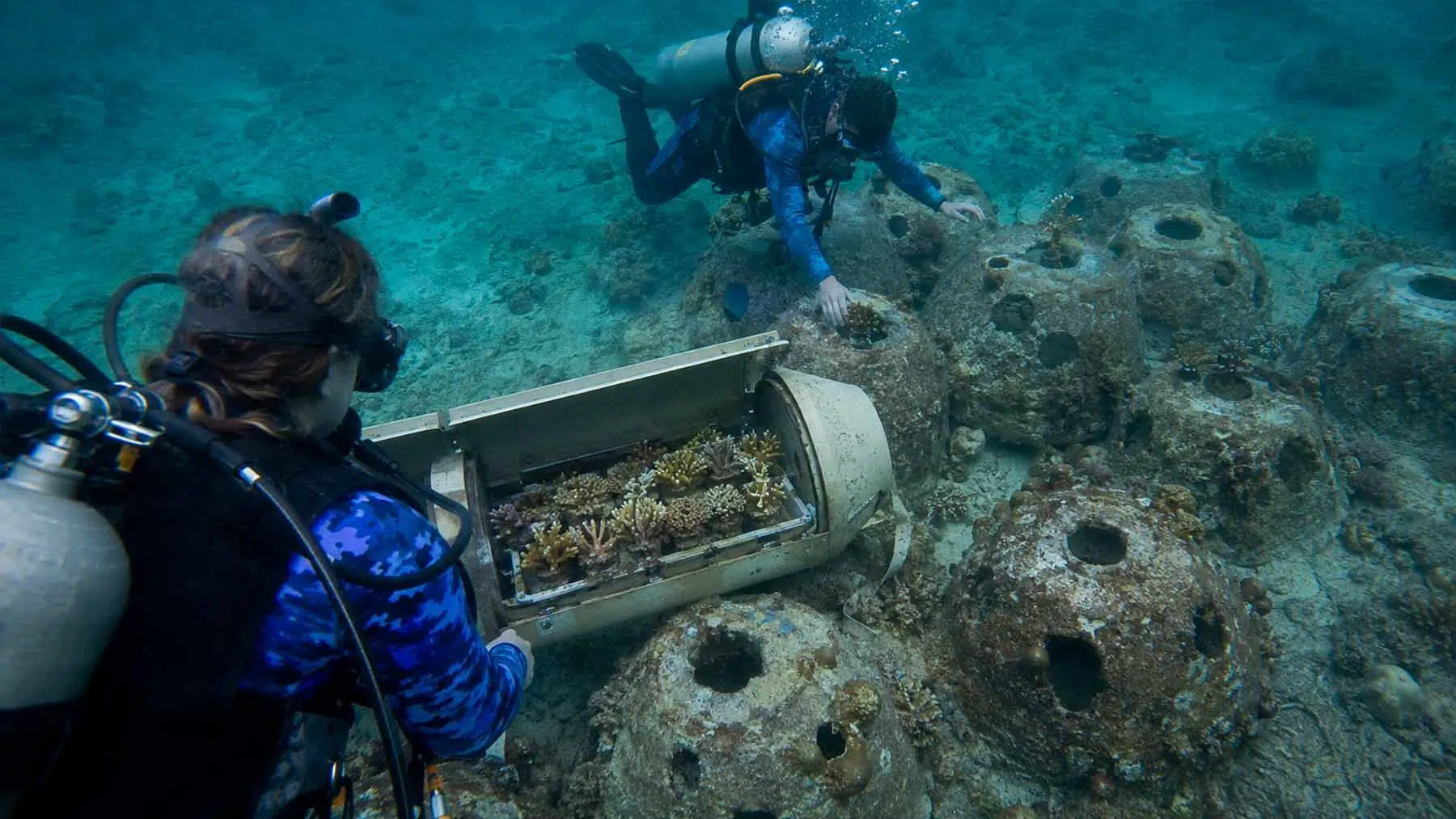
Living corals were placed inside a transparent cylindrical container (in torpedo form) and sent to the ocean floor at 217 ft.
Divers used specialized equipment to reach the bottom, where they extracted the contents from the container.
The corals were then transferred to concrete dome-shaped structures anchored to the seafloor. When the work was completed, the team had established 42 new coral colonies.
In comments to The Pulse, NOAA’s Southeast Fisheries Science Center highlighted the significant resources devoted to the project and how it is helping scientists better understand coral ecosystems.
The spill reached deeper than the surface
Transporting living creatures to those depths is difficult.
As depth increases, pressure rises and water temperatures decrease.
Scientists are working to minimize stress to the corals during transport.
Sixteen years ago, an estimated 4 million barrels of crude oil spilled into the Gulf of Mexico due to a blowout of a well drilled by BP. Oil slicks extended beyond the horizon and impacted shallow and deeper waters, including coral habitats and communities.
These areas support fish and marine mammals that humans rely on.
Scientists classify these corals as living in the “mid-light” zone, an area that receives limited sunlight.
It is not completely dark, but only dim.
Scientists believe the 2010 oil spill injured extensive areas of this zone. These impacts were compounded by chemical dispersants used to break up the oil slicks.
A bettermethod to reach the seafloor
The previous method of using a coral elevator worked, but this new method provided a more efficient way to get corals to the seafloor
NOAA Fisheries reports that federal agencies and cooperating organizations have been working to restore injured mesophotic and deep corals since they finalized the restoration plan in 2019.
These corals grow slowly, and transporting healthy colonies to the seafloor without damage is difficult. Corals cannot simply be dropped from a boat and expected to land near existing structures.
Earlier efforts used a large platform suspended by ropes and dropped from ships. Once the platform reached the seafloor, remote-operated vehicles (ROVs) or divers placed the corals on structures.
Fisheries biologist Chris Gardner developed an innovative method called the “Coral Torpedo,” a lightweight plastic tube with a unique hydrodynamic design.
This system functions much like a banking pneumatic tube.
Corals are loaded into the tube at the surface and then once on the bottom, divers transplant the corals into their designated habitat.
The tubes are lightweight and streamlined, allowing them to quickly travel to the bottom and reducing the amount of time spent in transit.
The goal of the coral torpedo was to develop a system capable of rapidly delivering corals to the seafloor while keeping them submerged in cold water similar to bottom temperatures. Researchers also needed a way to place the corals at specific locations, according to another report from NOAA Fisheries.
What the 42 new colonies actually are
Divers used closed-circuit rebreathers that allowed longer dives by recirculating air.
The dive to the bottom is short.
The return is much slower because divers must repeatedly stop at different depths for 5-10 minutes at a time. These stops help prevent decompression sickness.
A hyperbaric doctor monitored the divers after they returned onboard.
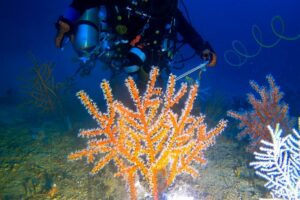
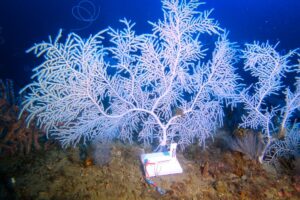
The corals placed on the concrete domes belonged to three species of deep-sea corals: Swiftia exserta, Muricea pendula, and Thesea nivea.
26 were grown in laboratories prior to being transplanted to the domes. The remaining 16 were moved from a nearby reef to start new colonies on the domes.
All three species are native to the upper-middle light zone of the Gulf of Mexico.
Why 42 colonies on concrete domes actually matter
If these coral colonies establish themselves and begin growing, they will demonstrate how restoration efforts can be effective in mesophotic and deep- water environments
This effort relied on a significant amount of resources that were supported by the Open Ocean Trustee Implementation Group If the colonies cannot sustain themselves, the effort will have failed.
The same thing is already happening in the North Sea, where endangered fish moved into steel turbine bases and turned an industrial site into a reef.
Read the whole thing?
Get the week's signal, not the noise
Our sharpest reporting on energy, climate and nature — free, once a week.